

The Wilder Mansion — Elmhurst, Illinois
The Familiar Haunting of a Place That Should Feel Safe.
I’ve lived enough years between Elmhurst, Addison, and Villa Park to know the quiet suburbs have their own breed of dread — polite, manicured, and pretending it doesn’t exist. Elmhurst especially likes to package its history in neat, municipal narratives: good schools, safe streets, and the occasional art fair masquerading as culture. That’s what makes the Wilder Mansion interesting. It’s the one place in town that feels like it remembers what everyone else is trying to forget.
It’s a beautiful building — stately, symmetrical, aggressively well-preserved. Too perfect to be trustworthy. Once a private estate, later a library, now a venue for fundraisers and photo ops. Beneath the renovations, people have reported footsteps overhead when the upper floors were locked, mirrors that delay before giving back a reflection, and a piano that occasionally plays one note — never a melody, just a pulse. Precision without emotion. If this place is haunted, it’s by something organized.
During a renovation, workers found scorch marks beneath newer floorboards — no record of a fire, no explanation, just evidence of something burned and buried. One electrician left the job after hearing humming from behind a sealed wall. He said it sounded human, but disciplined — like someone keeping time. I believe him. The Wilder Mansion doesn’t dramatize. It doesn’t even warn. It observes.
Elmhurst doesn’t do gothic decay. It does maintenance. Everything here gets polished, repainted, explained away. But Wilder is different. It’s patient. It listens. It feels like the building itself is conducting a long-term study on the people who walk through its doors — as though remembering is its primary function. I’ve always said ghosts aren’t tragic; they’re persistent systems with bad data integrity.
New haunted hometowns every Wednesday.
Want yours dissected next? Say the word.
Familiar places can be the most predatory. —F.

La Carafe — Houston, Texas
Oldest Building. Oldest Ghost.
When you stroll into the bar La Carafe in downtown Houston — built in 1847, surviving fires, rebuilds, bad whiskey and worse decisions — you expect time-worn liquor. You don’t expect to feel watched by someone who used to pour it. Yet, patrons whisper of a ghost named “Carl” who doesn’t just haunt the walls — he haunts the service. Glasses tip. Cash registers open. Chairs move sideways. He’s not hiding. He’s waiting for you to notice.
The building is one of Houston’s oldest commercial structures. According to local haunt-hunters, Carl is joined by another presence upstairs: a child’s laughter, the bounce of a phantom ball when no one else is in the room. US Ghost Adventures+2Secret Houston+2 What I find interesting here is the shift: from “something trapped” to “something appointed.” Carl isn’t stuck. He’s chosen a station — behind the bar. And it means business if you cross into his zone.
Walk to the second-floor window after closing. Some bartenders swear they’ve seen a figure standing there, silhouetted in the dim street-lights. A watcher. Not an accident. Maybe one of the earliest patrons of a ghost club that didn’t yet know it was haunted. When the building was a bakery, then a hair salon, then whatever the hell Houston turned it into, this presence stayed. I like to imagine Carl’s bar shift never ended. And now he’s waiting for his last call.
If you dig deeper, you’ll find the bar rests above old market square bones. Layers of history, commerce, loss. These places are easy to dismiss as quaint. But when you’re alone, after closing, lights low, and you hear the register click — you’ll know. These aren’t echoes. They’re obligations. Carl still serves. He still expects a tab. And you’re the guest who didn’t pay. Make sure you say hi to Stormphrog too.
New haunted hometowns every Wednesday.
Think your town’s haunted? Want it in the ledger? Comment below — I’ll see it.
Don’t mistake silence for safety. —F.

The Grey Librarian — Arlington Heights, Illinois
She Never Left Her Post
Some hauntings lash out. This one simply observes. The Arlington Heights Memorial Library has long been the subject of quiet rumors — not the childish “books falling off shelves” kind, but something colder. Staff who close up after hours report the same sensation: being evaluated. As if the rows of archived silence have grown tired of being read, and decided to start reading back.
They call her the Grey Librarian — not because of her dress, but because her presence drains every color out of the room. No one claims to see her directly. Instead, they notice changes. Elevator doors opening to an empty basement floor that was never called. The soft pad of footsteps between stacks long after the last patron has left. A chair slightly turned… toward where you’re standing. She isn’t tragic. She isn’t violent. She is dutiful. She has not abandoned her post.
One former employee swore they heard pages turning in a dark reading room — not scattered pages, but deliberate turns. As if someone were still cataloguing. Another described the heavy certainty that if they spoke aloud, someone would shush them. But here’s the detail that never makes the local newsletters: the Grey Librarian is not replaying a moment. She is engaged. You don’t terrify a presence like this. You interrupt it.
This is not a ghost caught in memory. This is a sentinel. Watching for something — or someone — out of place. And if she fixates on you, understand this: she does not want you gone. She wants you remembered. Permanently. In the kind of archive you don’t walk away from.
New haunted hometowns arrive every Wednesday.
If you want your town on this ledger, comment it. Just don’t ask me to help if something answers back.
Don’t mistake silence for safety. —F.

The Hermitage Ruins — Ancaster, Ontario
Where the Ruins Remember You Back
From a distance, the Hermitage Ruins look like history — charred stone, tangled ivy, the bones of a mansion left to rot. But step inside the perimeter, and it stops feeling archaeological. It feels observant. A forest can ignore you. The Hermitage does not. It studies. It waits. It adapts. The locals of Ancaster call it romantic. Those who’ve heard footsteps behind them when no one else was there have another word: awake.
They tell the polite version — a forbidden romance, a coachman’s suicide, a lady of the house perishing in a fire. Tragic, cinematic, almost comforting. But the reports don’t speak of sorrow. They speak of mimicry. Visitors hear pacing in the leaves beside them, perfectly in sync, stopping when they stop. Some catch a figure through the broken archways — not drifting like a memory, but standing still, facing them, as if interrupted. Intelligent hauntings don’t loop. They anticipate.
One woman claimed she heard soft weeping beyond the ruins and followed it, only to realize it wasn’t calling for help — it was leading. Another man swears he saw someone pass briefly through what used to be a doorway, but the form vanished before it touched shadow. The house is gone. The floor, gone. And yet something still travels its blueprint, room to room, as if it refuses to accept the evacuation order of fire.
This place is not content with being remembered. It wants to be acknowledged. It doesn't feed on belief — belief flatters it. What it wants is interaction. Recognition. And if you give it too much attention, it gives you something back: the dreadful suspicion that it now knows you. Places like this don’t haunt. They hunt for repetition.
New haunted hometowns rise every Wednesday.
Want me to peel back your town next? Comment it. I read everything.
Don’t mistake silence for safety. —F.

White Cemetery & Cuba Road
Where Grief Walks Without a Face
Most roads get quieter at night. Cuba Road doesn’t. It behaves like it’s waiting. Just outside Arlington Heights, it loops past White Cemetery, a place too small to justify how many people refuse to speak about it. There are no theatrics here — no guided tours, no docents selling EMF keychains. It’s the kind of haunt that doesn’t perform. It simply exists.
The legend is always simplified as: “There’s a lady in white.” Which is inaccurate. There is a figure that wears white, yes — but she is not porcelain-tragic or poetic. She has no face. Witnesses report a human silhouette but with the facial features scraped clean, like grief erased identity. She doesn’t reach. She doesn’t scream. She watches. And something primordial in the human brain understands: this is not meant to be observed.
Then there’s the phantom car — black, silent, often appearing behind you in the mirror. Tailgating. Matching your speed. No license, no lights. Try to confront it and it evaporates into the treeline like it was never made of matter at all. Paranormal crews have reported footsteps circling them through the gravestones, but no gravel disturbed. One even claimed the cemetery gate opened inward for them — amusing, considering that particular iron gate has no hinges.
There is no once-upon-a-time tragedy here. No named curse. And that is exactly what makes White Cemetery worse than theatrical haunts: there's no narrative to solve. No redemption arc. Just persistence. Cuba Road doesn’t want believers. It wants witnesses.
New haunted hometowns drop every Wednesday.
Want yours dissected? Comment it. Don’t worry — I’ll see it.
Don’t mistake silence for safety. —F.

Shadow People: Encounter at a Kentucky Gas Station
Kentucky, 2023. David Thompson, a trucker, pulled into a small, roadside gas station at 3 a.m., looking to fill his tank. But he wasn’t alone. As he stepped out, he saw them—shadowy figures moving around the station, their forms so dark they seemed to swallow the light. One even approached him, stopping just out of reach before vanishing into thin air. His encounter, one of the many reports from people experiencing shadow people in the region, suggests a deeper mystery. Are these manifestations of sleep paralysis, or something else entirely? Experts speculate that shadow people could be a psychological construct, but David's account left everyone wondering: if it was a trick of the mind, why was it so vividly real? -Frank

Poltergeist Activity: The Strange Case of the Cardiff Poltergeist
If you thought poltergeists only made appearances in over-the-top Hollywood films, think again. In Cardiff, Wales, last year, the Cardiff Poltergeist became the talk of paranormal forums. For weeks, objects began flying off shelves in a house previously thought to be ordinary. Family members witnessed lights flickering uncontrollably and furniture moving on its own. Paranormal experts from the Society for Psychical Research were called in, and what they uncovered was an intriguing mix of psychokinesis and suppressed emotional energy. No matter what the cause, the event reignited debate over the true nature of poltergeist activity—whether it’s spirits or the mind itself unleashing its fury. Let us know if you’d be interested in us doing a topic/episode about this one. -Frank
Places that shouldn’t exist. Or did… temporarily
Catching up on some Pokémon Emerald, and I’ve been waiting for that damned island to appear. I’m not sure it ever will, however… It got me to thinking about places that have appeared, then disappeared. Not a mirage, illusion, or hallucination like in Pokémon, but I decided to take a look at some real life instances. Here’s what I found. Several eerie accounts of places that shouldn't exist, along with documented instances of people encountering such places:
The Vanishing Cave: A group of friends found a deep cave along the Niagara Escarpment that they had never seen before. The cave was unusually cold and clean, and inside they felt as if they were being touched by unseen hands. They left after losing track of three hours, but when they returned with flashlights, they could never find the cave again (RoughMaps).
The Ghost Music Store: A musician discovered a music store in his town that he had never seen before. Inside, he found and purchased a bass guitar. When he returned a week later, the store was empty and appeared to have been closed for a long time (RoughMaps).
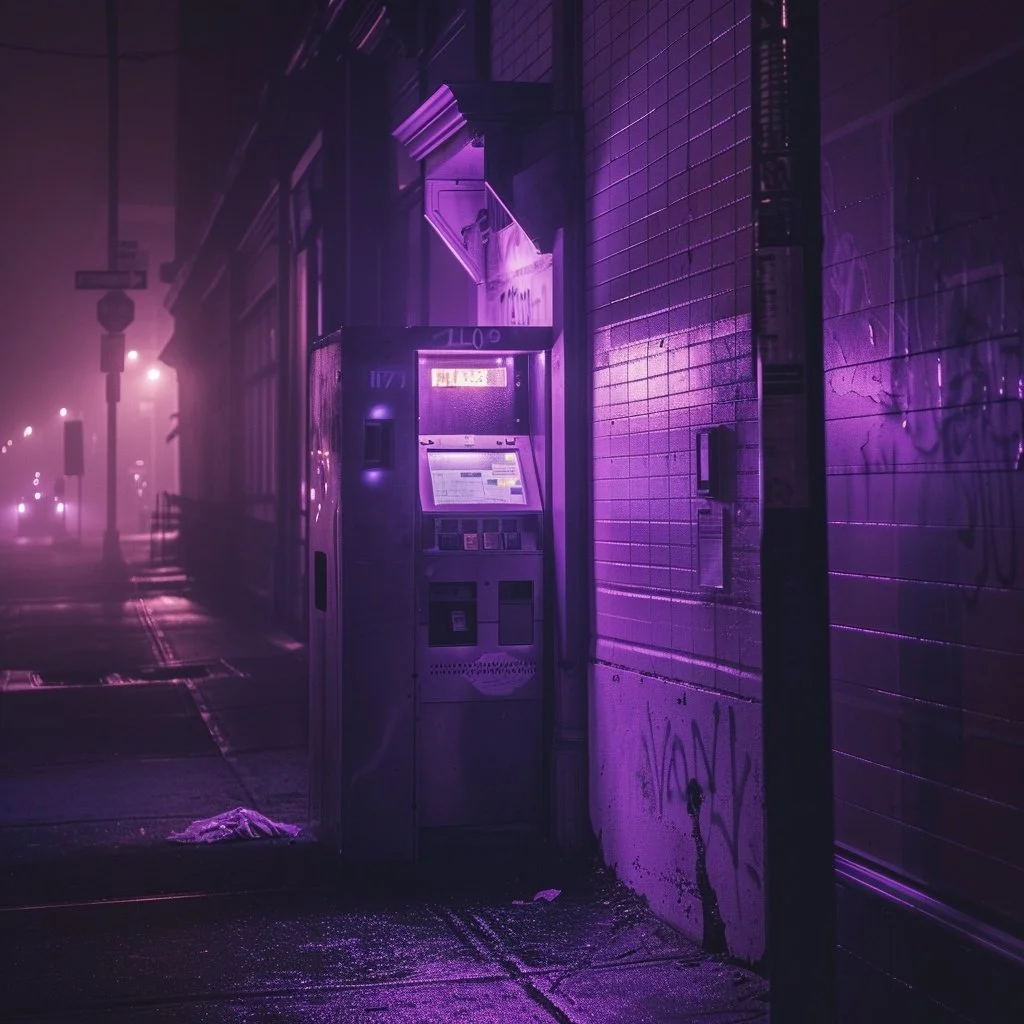
The Disappearing ATM: One person guided his roommate to an ATM to withdraw money, but when they tried to find it again a few days later, the ATM was gone, replaced by a blank wall. Even the roommate was baffled by the disappearance (did you know?).
The Spooky Lighthouse: In a seaside town, an offshore decommissioned lighthouse sometimes illuminates at random late nights despite being locked and without utilities. By the time anyone investigates, the light has stopped, and the cause remains a mystery (did you know?).
The Phantom Town: A driver found himself in a dense fog and his car broke down in what seemed like the middle of nowhere. He decided to sleep in the car until morning. When he woke up, he found himself in the main street of a small town that hadn't been there the night before. The town disappeared from maps, and he never found it again (RoughMaps).
These stories contribute to the spooky atmosphere surrounding places that defy explanation, suggesting that there may be locations and phenomena that challenge our understanding of reality. Have you ever seen anything like this? Reach out, and let us know!
https://www.roughmaps.com/travel/people-share-their-unexplained-stories-of-being-in-a-place-that-shouldnt-exist/
https://didyouknowfacts.com/17-creepy-stories-about-places-that-shouldnt-exist/

The Tunguska event of 1908: Today in History
In the remote Siberian wilderness, a celestial symphony played out on June 30, 1908, leaving an indelible mark on the Earth. The Tunguska Event, a cosmic enigma wrapped in the silence of the taiga, unfolded as a celestial visitor clashed with our planet in a display of unimaginable power.
The Cosmic Ballet: As the sun dipped below the horizon, a blinding light erupted over the vast Tunguska region. The air crackled with an otherworldly energy as a celestial object, presumed to be a comet or asteroid, hurtled toward Earth. In a cosmic ballet unseen by human eyes, the intruder collided with our atmosphere, unleashing a cataclysmic explosion.
The Forest's Silent Embrace: The force of the impact, estimated to be equivalent to several megatons of TNT, flattened approximately 80 million trees over an area of 2,150 square kilometers. The once-thriving taiga fell into a stunned silence, the echoes of the celestial intrusion reverberating through the stillness.
Theories in the Whispering Winds:
Cometary Collision: One prevailing theory suggests that a comet, composed of icy and volatile materials, entered the Earth's atmosphere. The intense heat generated during its descent caused the comet to disintegrate explosively before reaching the ground.
Nikolai Vladimirovich Vasiliev's Black Hole Hypothesis: In the realm of unconventional theories, scientist Nikolai Vladimirovich Vasiliev proposed the existence of a small black hole colliding with Earth. While this theory lacks widespread support, it adds an intriguing layer to the speculative tapestry surrounding the Tunguska Event.
The Tunguska UFO Hypothesis: Some theories entertain the notion that the Tunguska Event was caused by the crash of an extraterrestrial spacecraft. This speculative idea, while captivating, lacks concrete evidence and is considered highly unlikely by mainstream scientific communities.
Sources:
Contemporary Reports: Eyewitness accounts from locals and early expeditions provide insights into the immediate aftermath of the Tunguska Event.
Scientific Investigations: Ongoing studies by scientists, including those conducted by the Tunguska Space Phenomenon Public State Fund, contribute to our understanding of the event and its implications.
Comprehensive Research Papers: Papers published in scientific journals, such as those in the International Journal of Astrobiology, present detailed analyses of the Tunguska Event based on modern scientific methodologies.
As the whispers of the Tunguska Event linger in the Siberian winds, the cosmic mystery endures, inviting explorers and scientists to unravel the secrets hidden within the heart of the taiga.

Why “Paranormal Evidence” cannot usually be verified, and why most of it is faked.
We’ve recently discussed this in some episodes. I’d love to open a discord about why I personally feel we should consider most “proof” of the paranormal fake.
Verifying the authenticity of photos and videos of paranormal events is challenging due to several factors:
Technological Manipulation: With advances in photo and video editing software, it has become increasingly easy to manipulate media. Programs like Photoshop and After Effects allow users to create highly realistic but entirely fake images and videos. This makes it difficult for even experts to distinguish between genuine and altered content without thorough forensic analysis (National Science and Media Museum) (Smithsonian Magazine).
Psychological Factors: The power of suggestion and expectation can heavily influence what people believe they see. Studies have shown that individuals are more likely to report supernatural occurrences if they are primed to expect them. This can lead to a confirmation bias, where ambiguous or natural phenomena are misinterpreted as paranormal (Smithsonian Magazine).
Environmental Conditions: Various natural and environmental factors can create sensations or illusions that people might perceive as paranormal. For example, infrasound—sound waves below the range of human hearing—can cause feelings of anxiety and unease, and even visual hallucinations. Unusual electromagnetic fields can similarly affect perception, leading to sensations of a presence or unusual visual phenomena (Smithsonian Magazine).
Scientific Investigations: Historical attempts to scientifically investigate paranormal phenomena have often found natural explanations for what initially seemed supernatural. For instance, carbon monoxide poisoning has been identified as a cause of hallucinations and ghostly experiences in some well-documented cases. These investigations often reveal mundane causes behind seemingly mysterious events (Smithsonian Magazine).
Sleep Paralysis: Many reports of ghost sightings occur during sleep paralysis, a state where the body is temporarily unable to move while falling asleep or waking up. This condition can cause vivid and terrifying hallucinations, including the sensation of an evil presence in the room. This physiological explanation accounts for many experiences people attribute to the paranormal (Smithsonian Magazine).
These points illustrate why most accounts of paranormal events are likely to be misinterpretations, fakes, or natural phenomena rather than evidence of actual supernatural occurrences.
https://www.scienceandmediamuseum.org.uk/objects-and-stories/science-investigating-paranormal
https://www.smithsonianmag.com/smart-news/five-scientific-explanations-spooky-sensations-180973436/
Frank

The Wild Number of People who go Missing in Alaska
People going missing in Alaska is a significant and mysterious phenomenon, particularly in an area known as the Alaska Triangle. Since the 1970s, an estimated 20,000 people have vanished in this region, which spans from Anchorage to Juneau and Utqiagvik. The disappearances include prominent figures like U.S. House Majority Leader Hale Boggs and Congressman Nick Begich, whose plane vanished in 1972 without a trace despite an extensive search effort.
Several theories attempt to explain these disappearances. Some suggest natural dangers such as treacherous terrain, extreme weather, and hidden crevasses in glaciers. Others propose more supernatural explanations, including sightings of UFOs, cryptid creatures like Bigfoot, and indigenous legends of shape-shifting beings known as Kushtaka. Additionally, there are speculations about electromagnetic anomalies that disrupt navigation and induce disorientation in travelers (The Jerusalem Post) (Horror Bound).
These disappearances and the eerie explanations contribute to the spooky reputation of the Alaska Triangle, drawing comparisons to the infamous Bermuda Triangle. The combination of vast wilderness, potential supernatural elements, and unsolved cases of missing persons creates an aura of mystery and fear around this region of Alaska (The Jerusalem Post) (Horror Bound).
https://www.jpost.com/omg/article-774019
https://www.horrorbound.net/blog/2019/10/29/alaskan-triangle
Frank
What is CE-5?
What is CE-5? What does it stand for? How do you do it? Are there benefits or risks? As some of you may remember Jessiy talked about this on a previous episode, so here are some answers to these question in case you missed the episode. What is CE-5? CE-5 stands for Close Encounters of the Fifth Kind. J Alan Hynek created the classifications for different ufo and Extraterrestrial contact and sightings. Close encounters of the first kind is when you see a craft or ufo in the sky. Close encounters of the second kind is when you see evidence of it or physical proof such as a crop circle or radiation. Close encounters of the third kind is not just an amazing movie, but it stands for when you see the occupants of the ufo outside of the ufo. Close encounters of the fourth kind is when someone is taken aboard an extra terrestrial craft. Close encounters of the fifth kind is human initiated contact. When humans try to contact extra terrestrials. Dr Steven Greer coined that term back in the 70;s.
How do you do a CE-5? Dr Steven Greer created these protocols for humans to try an contact our star brothers and sisters. There is an app called CE-5 that you can download onto your phone or computer and there are steps to follow as well as photos and videos that show examples of real contact. There are also examples of what satellites look like or meteors so there is no confusion as to if you are seeing a ufo or not. There is also a messaging section so people can network and find others that live in their area so you can form your own CE5 group. Each group does their CE5’s differently. So find the right group of people for you and give it a try.
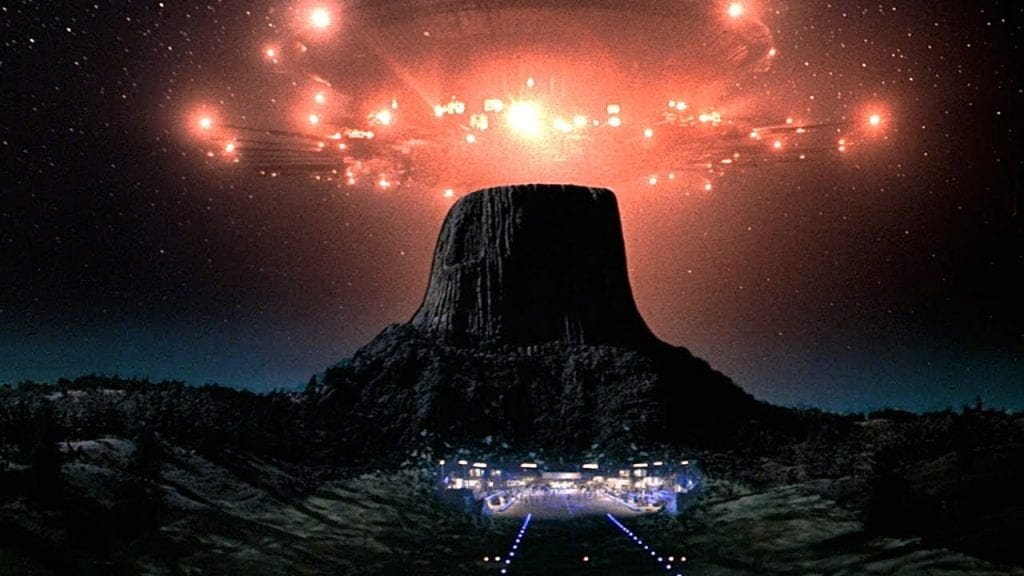
The benefits of doing CE5s are plenty. You can end up seeing some amazing things you did not think possible. People have been healed at CE5 events. People form unbreakable bonds with each other and with other non human entities. The best advice that Jessiy has is to not have fear. Would you want to be around people that are scared of you? Probably not. If you start doing CE5s make sure you are ready and do not have fear just in case you are joined by a being that is not human. If you would like more information on this topic the film Close Encounters of the Fifth Kind is a great place to start. Good luck and have a fun.
The anniversary of “The Exorcist”
Today in history, we celebrate the release of “the Exorcist” Based on a true story, and the deaths surrounding the filming. Was the set cursed? Let us know!
Today in history, we celebrate the release of “The Exorcist” March 16th 1973
In the dimly lit corridors of cinematic history, "The Exorcist" emerged as a spine-chilling masterpiece, a tale of demonic possession that transcended the silver screen. Yet, beneath the veneer of terror, the film's production was marked by an eerie series of events that seemed to echo the supernatural horrors depicted in its frames.
The Birth of a Cinematic Nightmare: In the early 1970s, director William Friedkin brought William Peter Blatty's novel "The Exorcist" to life, weaving a narrative that delved into the realms of faith, fear, and the demonic. As the cameras rolled, the set itself became an atmospheric cauldron, with unsettling incidents and unexplained occurrences casting an ominous shadow over the production.
The Macabre Specter of Death: Regrettably, the making of "The Exorcist" was marred by a series of untimely deaths that seemed to mirror the film's ominous themes. Actress Ellen Burstyn suffered a painful back injury during a possessed scene, mirroring the torment of her character. The unsettling synchronicity extended to other cast and crew members who faced unexpected health issues during filming.
The Tragic Demise of Jack MacGowran: The most poignant chapter of this dark tale unfolded with the death of Jack MacGowran, who portrayed Burke Dennings in the film. MacGowran's life met a premature end due to complications from influenza. His passing cast a somber pall over the set, leaving an indelible mark on the production and creating an unsettling connection between reality and the film's supernatural narrative.
The Exorcist's Curse or Coincidence?: While these incidents unfolded, speculation arose about a purported curse attached to the film. Some saw the eerie events as more than mere coincidence, attributing them to the inherently unsettling nature of the subject matter. Others dismissed the notion, viewing the unfortunate events as tragic happenstance.
Sources:
"The Exorcist" (1973) - Directed by William Friedkin: The film itself stands as a primary source for its impact on audiences and its cultural significance.
Various Interviews and Documentaries: Insights into the production challenges and the occurrences on set can be found in interviews with cast and crew, as well as documentaries about the making of "The Exorcist."
While the supernatural aura surrounding the production of "The Exorcist" remains the subject of debate, its legacy as a cinematic masterpiece endures, leaving audiences both terrorized and captivated by the blurred lines between fiction and reality.

The Pheonix Lights
Today in History!
In the vast expanse of the Arizona sky, a celestial spectacle unfolded on that fateful night of March 13, 1997, etching the mysterious tale of the Phoenix Lights into the pages of extraterrestrial lore.
The Extraterrestrial Ballet: As dusk settled over Phoenix, the unsuspecting city became the stage for a cosmic ballet. Witnesses gazed upward, their eyes transfixed by a formation of inexplicable lights that materialized in the night sky. A parade of orbs, arranged in a seemingly purposeful V-shaped pattern, silently glided across the heavens, leaving an indelible mark on the collective imagination.
The ethereal glow of the Phoenix Lights cast an otherworldly radiance, illuminating the Arizona horizon in a display that defied terrestrial explanation. Silent and majestic, the lights traversed the night, captivating onlookers who strained their eyes to fathom the celestial enigma above.
A City Abuzz: The city of Phoenix buzzed with intrigue and speculation in the wake of the extraordinary sighting. Eyewitness accounts flooded in, describing a massive craft spanning the length of several football fields, adorned with the mysterious lights that seemed to defy the laws of conventional aviation. As the news spread, the Phoenix Lights ignited a fervor of curiosity, and questions about the existence of extraterrestrial visitors lingered in the collective consciousness.
Skepticism and Official Statements: In the aftermath, skepticism and speculation mingled like constellations in the night sky. The U.S. Air Force initially attributed the sighting to flares dropped during a training exercise, attempting to demystify the phenomenon. However, this explanation fell short for many witnesses who attested to the cohesive and deliberate movement of the lights, challenging the official narrative.
Sources:
Eyewitness Accounts: Numerous eyewitness testimonies form the core of the Phoenix Lights narrative. Individuals from various vantage points reported seeing the V-shaped formation of lights, contributing to the overall mystique of the event.
Official Statements: The U.S. Air Force's initial explanation of the lights as flares is documented in official statements released after the incident.
The Phoenix Lights remain an unsolved cosmic riddle, a luminous page in the extraterrestrial anthology that continues to captivate the imagination and spark discussions about the possibility of visitors from beyond our celestial borders.
Sources:
Dunning, Brian (April 26, 2007). "Skeptoid #41: The Alien Invasion of Phoenix, Arizona". Skeptoid. Retrieved 2011-03-23.
Steve Lantz (Director) (2005). The Phoenix Lights Documentary (Internet). Arizona.
Shanks, Jon (March 18, 2007). "National Ledger – Former Arizona Gov. Admits UFO Sighting On Night of Phoenix Lights". Archived from the original on 2007-03-20. Retrieved 2007-03-19.
The Sierra Sounds
What are the sierra sounds
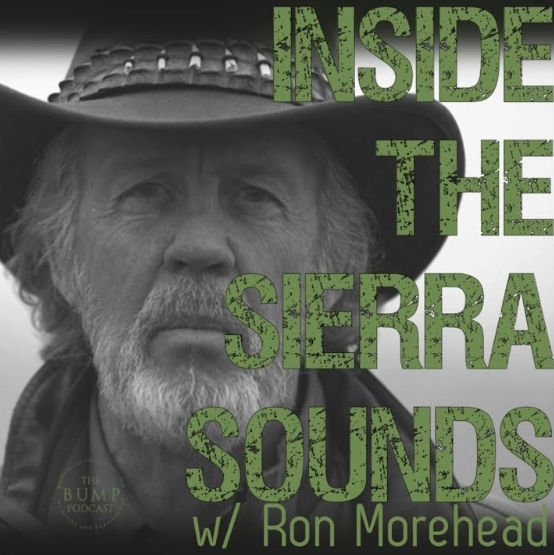
In the Bigfoot community there are these audio files that are deemed the holy grail of Sasquatch sounds. They were recorded by Ron Morhead in the 1970s in Sierra county CA.
Ron got invited to this area in the mountains to camp with a couple friends so they could get another witness to what they were experiencing there. They would hear these loud inhuman noises being made at night and they would see strange lights throughout the forest. Ron brought his old tape recorder with and one night they were able to record these sounds and became entranced by what they were hearing. It would become known as samurai talk or chatter. You could clearly hear different beings with different vocal patterns. There were times they would hear their camp getting destroyed but would go and check to find nothing had been moved or misplaced. They would also have bread taken out of their bags and out of the plastic like a human did it but no one was around because this area was extremely hard to get to and they never once came into contact with another human over the years of camping there.
These sounds have been studied by universities and linguists. They have proven that these sounds are not of human origin because of the range of the vocal patterns. They go too high and too low for a human to make them. There are also too many “syllables” that are spoken at a rate of speed and frequency that is impossible for humans to make or any animal that is on file. They have yet to be debunked as fake because of how old the tapes are. They were recorded before people could alter recordings.
If you would like to listen to these sounds you can go to Ronmorehead.com or find them on YouTube. Ron also has a couple books out and has been on many podcasts and films.

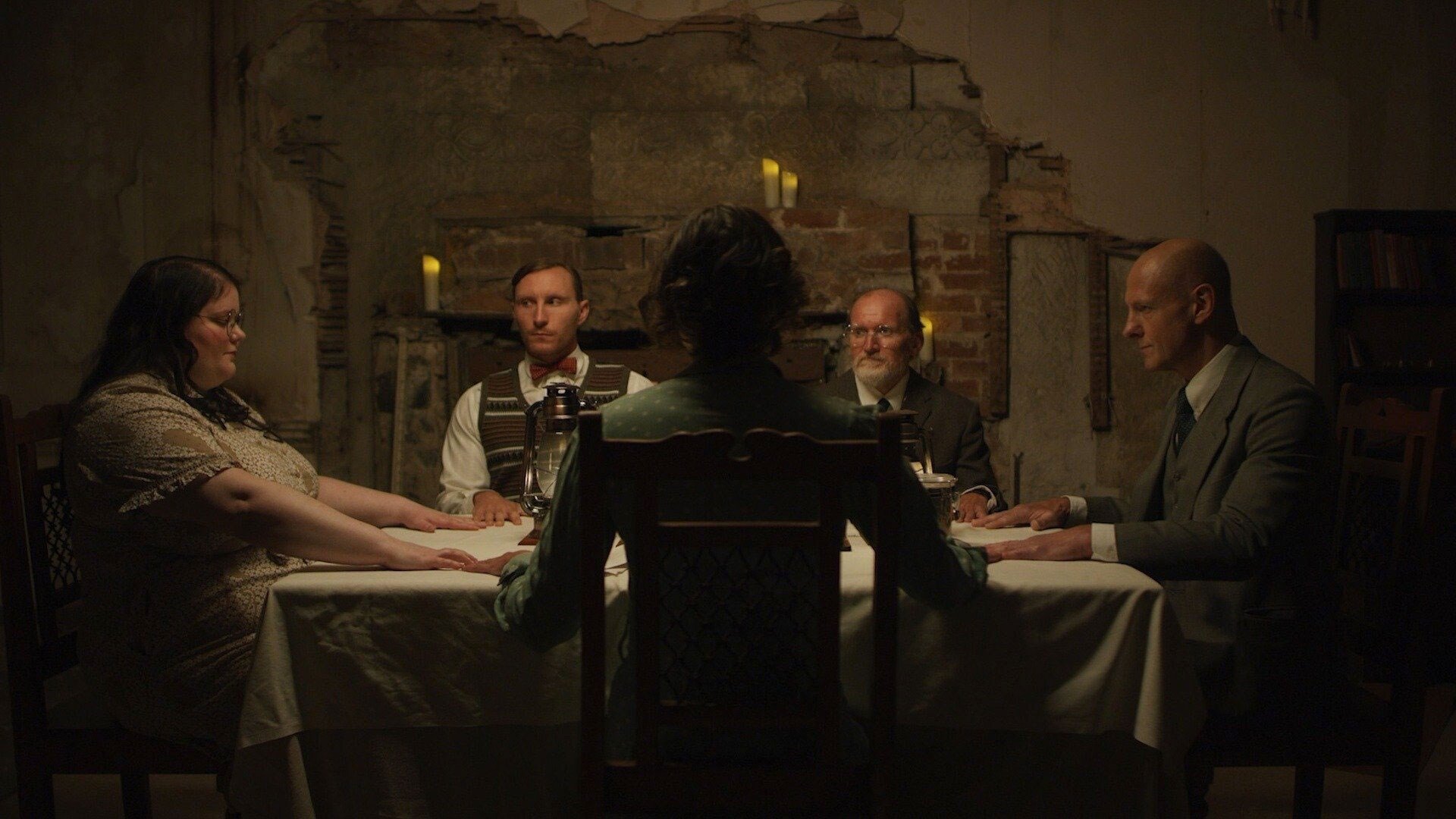
Today in History the Haunting of Borley Rectory
Amidst the quiet English countryside, the tale of Borley Rectory, once deemed the "most haunted house in England," unfolds like a ghostly tapestry, weaving together spectral whispers and tragic flames.
The Haunting: In the late 19th and early 20th centuries, Borley Rectory, a Victorian mansion in Essex, gained notoriety for its alleged paranormal activity. Tales of phantom footsteps, ethereal figures, and mysterious messages etched themselves into the annals of the supernatural. The house became a spectral stage where the living and the dead seemingly shared the same shadowy corridors.
Phantom nuns, spectral coaches, and a ghostly nun known as the "White Lady" were said to wander the estate, leaving an eerie trail of unexplained phenomena. The Reverend Lionel Foyster and his wife Marianne, who resided in the rectory during the 1930s, bore witness to inexplicable events, including poltergeist activity, ghostly inscriptions on the walls, and mysterious bell tolls that echoed through the night.
The Mysterious Fire: On the eve of February 27, 1939, tragedy struck the already haunted Borley Rectory. A fierce fire consumed the aged timbers of the mansion, casting a crimson glow against the darkened countryside. The flames danced with an almost supernatural intensity, as if fueled by the otherworldly forces that had long dwelled within the rectory's walls.
The once-proud structure, a repository of both historical charm and spectral mysteries, crumbled beneath the relentless assault of the inferno. The Borley Rectory, a focal point of supernatural intrigue, was reduced to smoldering ruins, its secrets lost in the billowing smoke.
Sources: The Borley Rectory haunting and its eventual destruction have been chronicled in various accounts, with one of the most notable sources being "The Most Haunted House in England" by Harry Price. Harry Price, a paranormal investigator, conducted investigations at Borley Rectory and wrote extensively about the alleged hauntings. It's important to note that while the Borley Rectory story is famous, it has also been a subject of controversy and skepticism, with debates about the authenticity of the reported paranormal activity.
photo credit to “The Ghosts of Borley Rectory” on Peacock

What is Ego Death?
After discussing this topic during last nights Podcast, I thought it might be cool to cover what ‘Ego Death’ is since we didn’t elaborate.
Ego death is a concept primarily rooted in psychology and spirituality, describing a profound psychological experience where the individual undergoes a dissolution or transcendence of their sense of self or ego. It's often associated with intense spiritual or psychedelic experiences, but can also occur spontaneously or through practices like meditation.
During ego death, individuals may experience a loss of boundaries between themselves and the external world, a dissolution of their identity, and a sense of oneness or unity with everything around them. This can lead to a profound shift in perspective, often accompanied by feelings of awe, interconnectedness, and spiritual awakening.
In psychological terms, ego death can be seen as a temporary breakdown of the ego's normal functioning, allowing for a more expansive and less constrained experience of reality. Some theorists suggest that experiencing ego death can be therapeutic, leading to increased self-awareness, empathy, and a deeper understanding of one's place in the world.
However, it's important to note that ego death experiences can be intense and potentially overwhelming, and may not always result in positive outcomes. Integration and support are often recommended for individuals who undergo such experiences, to help them make sense of their insights and incorporate them into their lives in a healthy way.
-Frank
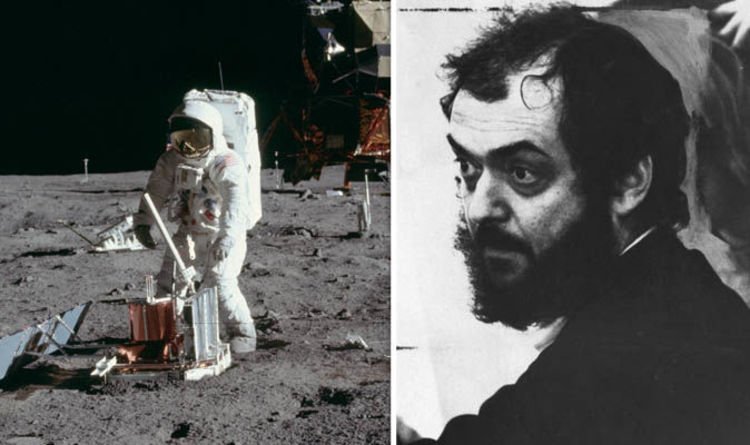
Did Stanley Kubrick Stage the Moon Landing? Today in History!
Do you think the moon landing was faked? Today in history, we discuss this topic!
In the heart of the Colorado Rockies, Stanley Kubrick wove a cinematic labyrinth of horror and madness in "The Shining." The Overlook Hotel, with its sinister secrets and ghostly specters, became an iconic setting where the thin line between reality and nightmare blurred, leaving audiences in a state of perpetual unease.
The Overlook Hotel's Haunting Spectacle: As Jack Torrance, played by Jack Nicholson, succumbed to the malevolent forces lurking within the hotel's corridors, Kubrick crafted a visual symphony of dread. The ominous twins, the enigmatic Room 237, and the cryptic labyrinth, all became indelible markers in the cinematic lexicon of terror. Kubrick's meticulous attention to detail transformed every frame into a chilling tableau, enveloping viewers in an unsettling atmosphere that lingered long after the credits rolled.
Conspiracy Theories Unveiled: Yet, the enigma surrounding "The Shining" extends beyond its celluloid reel, giving rise to a tapestry of conspiracy theories that swirl like phantom apparitions in the collective consciousness.
The Moon Landing Connection: Some theorists speculate that Kubrick, renowned for his attention to detail, subtly embedded clues in "The Shining" regarding his alleged involvement in faking the Apollo 11 moon landing. They point to symbols and imagery in the film, such as Danny's Apollo 11 sweater, as supposed evidence of Kubrick's complicity in a moon landing hoax.
Hidden Meanings in Symbolism: Devotees of the film have delved into the labyrinth of symbolism, suggesting that Kubrick intentionally filled "The Shining" with hidden meanings and subliminal messages. Theories range from interpretations of the film as a commentary on the genocide of Native Americans to Kubrick's personal exploration of the Holocaust.
Sources:
"The Shining" (1980) - Directed by Stanley Kubrick: The film itself serves as the primary source for understanding its themes, symbolism, and visual storytelling.
"Room 237" (2012): This documentary explores various conspiracy theories and interpretations of "The Shining," offering insights from enthusiasts and theorists who delve into the film's alleged hidden meanings.
While the conspiracies surrounding "The Shining" may invite skepticism, they undeniably add layers of intrigue to the film's enduring mystique. Kubrick's masterpiece continues to captivate audiences, inviting them to wander the eerie corridors of the Overlook Hotel, where the line between reality and imagination remains tantalizingly thin.
Was the Moon Landing Staged? We’d love to get your take!
the Berwyn Mountains UFO Crash
In the ancient shadows of the Berwyn Mountains, a celestial drama unfolded on that enigmatic night in January 1974, etching the tale of the Berwyn Mountains UFO Crash into the cosmic canvas of extraterrestrial lore.
The Silent Symphony in the Sky: As the tranquil Welsh landscape slumbered beneath a blanket of stars, an otherworldly symphony resonated through the mountains. Witnesses below would later recall a brilliant burst of light, illuminating the night with an ethereal radiance. The heavens seemed to crack open, revealing a celestial visitor whose origin defied terrestrial understanding.
The Mysterious Encounter: In the quiet village of Llandrillo, residents were stirred from their nocturnal repose by an inexplicable commotion. Eyes turned skyward, witnessing an anomalous object hurtling through the atmosphere. The heavens themselves seemed to protest the intrusion, manifesting a crescendo of strange lights and unearthly sounds.
The Unveiling of Controversy: In the aftermath of the cosmic visitation, controversy descended upon the Berwyn Mountains. Official explanations veiled in secrecy heightened suspicion, with initial reports attributing the disturbance to an earthquake. However, the tremors of skepticism reverberated, and local whispers spoke of a government cover-up concealing the truth of an otherworldly encounter.
Sources:
Contemporary News Reports: Local and national news outlets at the time documented the incident, capturing the initial confusion and subsequent attempts to decipher the enigma in the Berwyn Mountains.
Official Statements: Statements from government officials and authorities regarding the Berwyn Mountains incident are crucial sources, providing insight into the official narrative surrounding the events.
Investigative Studies: UFO researchers and investigators delved into the Berwyn Mountains incident, contributing studies and analyses that explore the nuances of the sighting, adding layers of interpretation to the mysterious event.
The Enigma Persists: Decades after the Berwyn Mountains incident, the UFO crash remains an enduring enigma. Skeptics and believers continue to scrutinize the events of that fateful night, with the mountains holding their secrets close. The Berwyn Mountains UFO Crash echoes through the valleys of Wales, an indelible mark on the tapestry of unexplained phenomena, beckoning curious minds to unravel the cosmic mysteries that linger in the shadows.
Photo credit: https://www.herald.wales/
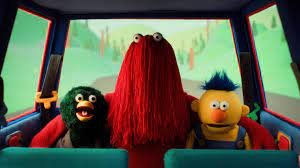
On ARG’s
What are ARG’s? Find out! If you’re familiar with them, tell us about your favorite and why!
One question we get often (because we discuss them so frequently-) What are ARG’s exactly?
An Internet ARG, or Alternate Reality Game, is an interactive narrative or puzzle-solving experience that takes place across various media platforms and the real world. ARGs are designed to engage participants in a collaborative and immersive storytelling experience, blurring the lines between fiction and reality. Here are some key characteristics of Internet ARGs:
Multimedia Storytelling: ARGs often unfold across different media, including websites, social media platforms, emails, phone calls, videos, and physical locations. Participants must piece together information from various sources to understand the narrative.
Real-time Interaction: ARGs typically unfold in real time, with the narrative progressing based on the actions and decisions of the participants. This real-time element adds a sense of urgency and immediacy to the experience.
Puzzle-solving and Challenges: Participants in ARGs are often required to solve puzzles, crack codes, or decipher hidden messages. These challenges can be presented in a variety of forms, ranging from online riddles to real-world tasks.
Community Collaboration: ARGs encourage collaboration among participants. Solving complex puzzles often requires a collective effort, fostering a sense of community among players who share information and insights.
Role-Playing and Immersion: Participants may be encouraged to assume specific roles or personas within the game, blurring the boundaries between the fictional narrative and the real world. This immersion enhances the overall experience.
Unfolding Narrative: The storyline of an ARG evolves over time, with new plot elements and challenges introduced periodically. This ongoing narrative keeps participants engaged and invested in the unfolding story.
Mystery and Suspense: ARGs often involve mysterious and suspenseful narratives, with elements of the unknown and unexpected. This sense of mystery is designed to captivate and intrigue participants.
Marketing and Promotion: While some ARGs are purely for entertainment, others are used as marketing tools for promoting movies, video games, or other products. They serve as an innovative way to engage an audience and generate interest.
One notable example of an Internet ARG is the "I Love Bees" campaign, which was a marketing effort for the video game "Halo 2." Participants engaged in a complex narrative involving websites, phone calls, and real-world events to uncover the storyline.
It's important to note that participation in ARGs is voluntary, and players are usually aware that they are engaging in a fictional experience. The line between reality and the game is intentionally blurred to enhance the immersive nature of the storytelling.
We recently did an episode on Liminal Land which you should totally check out. For extra credit, also check out some of our favorites including “Don’t hug me I’m scared" “The Sun Vanished” “Kraina Grzybów TV” and “Local 58.”